
Breathwork
& Somatic Practice
Evidence-based approaches to emotional regulation

Breathwork in its many incarnations has been used in several traditions and for millennia as a path to reach different states of consciousness.
A growing body of research is showing how practicing high-ventilation and slow-paced breathwork can reduce stress, anxiety, and depression, while also influencing self-awareness, emotion regulation, and the way we relate to our inner experience.
In this view, breathwork can be understood as a way of using the breath to modulate both body and mind, opening access to altered states of consciousness, greater presence, more rooted balance.

Conscious connected breathwork
This breathing technique is used to access expanded states of consciousness and facilitate deep emotional release. By working with the sympathetic nervous system in a safe and clinical container, we can reach subconscious layers of the psyche, processing non-verbal trauma and fostering profound personal transformation.
Breathing becomes faster and/or deeper than usual, so that ventilation rises above the normal range.
This practice can be can lead to powerful bodily sensations, heightened arousal, re-experiencing of past events and, in some forms, marked changes in subjective experience and consciousness.
When used in a therapeutic context, it helps in bringing emotionally significant material closer to awareness and may open a space for connection, exploration, release and meaningful change.

Slow-paced breathwork
Focused on improving heart-rate variability and parasympathetic stimulation, this practice is a powerful tool for nervous system regulation. Through precise, rhythmic breathing patterns, the body is shifted into a parasympathetic state, reducing anxiety, improving emotional resilience, and providing practical tools for daily stress management.
Breathing is deliberately slowed and regulated.
When used in therapy, it can help create stability, calm, and a more grounded contact with one’s inner experience.
Clinical research foundations
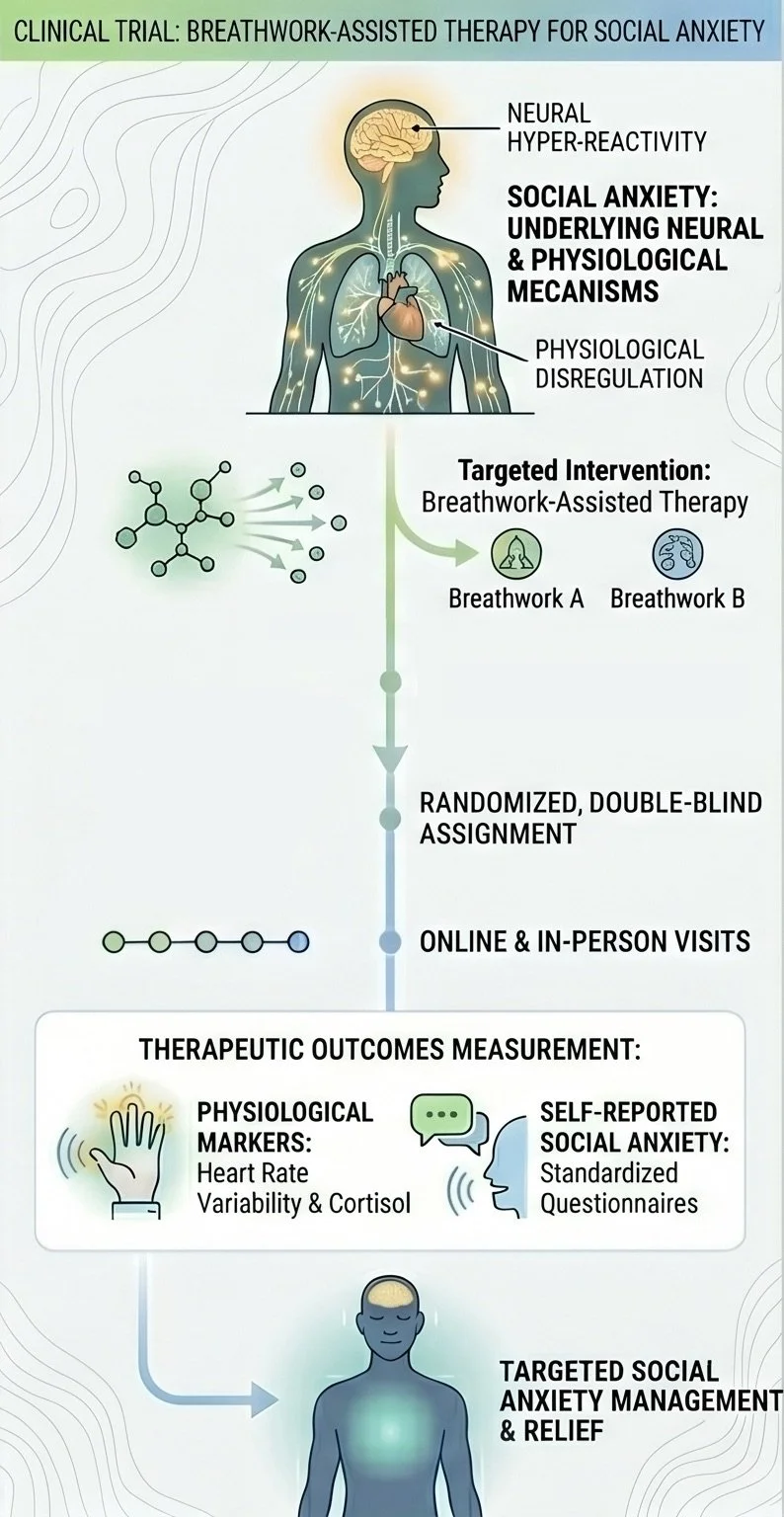
These two modalities are at the core of my ongoing clinical research at Maastricht University. My trial, "Breathe Hard to Breathe Easy", investigates how specific high-ventilation and slow-paced breathing protocols can serve as an evidence-based intervention for social anxiety. This dual approach ensures that every session is grounded in physiological science and clinical safety.
Contact
Fill in the form to get in touch.