Trip the pain away: Psychedelic therapies for physical and mental pain
The recent resurgence of interest in the analgesic potential ofpsychedelics has been driven by qualitative and survey studies,which have shown that individuals suffering from chronic painconditions, such as cluster headaches, reported improvementswhen using both high and low, non-hallucinogenic doses ofpsychedelics like LSD and psilocybin

Analgesic potential of macrodoses and microdoses of classical psychedelics in chronic pain sufferers: a population survey
Macrodoses, while less often used for analgesic purposes than microdoses, were reported to induce a higher level of pain relief than both microdoses and conventional pain medications (including opioids and cannabis). Although the effects were weaker and potentially more prone to expectation bias than with macrodoses, our results also suggested some benefits of psychedelics in microdoses for pain management.
Psychedelic-Assisted Psychotherapy-A Systematic Review of Associated Psychological Interventions
The aim is to construct a picture of what models of psychedelic-assisted psychotherapy are currently adopted in clinical research and to report on their clinical outcomes. Ad-hoc and adapted therapeutic methods were identified. Common principles, points of divergence and future directions are highlighted and discussed with special attention toward therapeutic stance, degree of directiveness and the potential suggestive effects of information provided to patients.

Relevant Issues in Psychedelic-Assisted Psychotherapy Research
The present work aims at summarising the state of knowledge and at highlighting relevant areas that are instrumental to the understanding and advancement of research in the field. After an introduction aimed at explaining what psychedelics are and how they work, we will discuss their suggested mechanism of action, the importance of the blinding problem in modern age RCTs.

Development and preliminary evaluation of the Peace Attitudes Scale.
Results showed that, after an exploratory factor analysis, 5 domains appeared to be relevant: Sociopolitical, Personal Well-Being, Ease With Diversity, Environmental Attitude, and Caring. The PAS can be used to further assess the relationship between peace and other relevant variables. More research is needed first to confirm the validity of PAS and second to test its usefulness in educational and social settings.
The Peace Attitudes Scale
Data were collected from a sample of adolescents and adults aged between 17-40 years from four regions in Italy. Exploratory factor analysis, internal consistency, test-retest reliability, convergent validity, and concurrent validity were reported. The authors have indicated that future research should address confirmatory factor analysis of the scale.

Psychedelic-Assisted Psychotherapeutic Approaches - A narrative theoretical review
Exploring these principles, procedures, underlying hypotheses and tenets could open a new line of research that has the potential to provide support to the idea that psychedelics are not just therapeutic agents per se but rather enabling factors of Psychedelic Psychotherapy: a tool exploiting increased contextual sensitivity to achieve and consolidate psychological health, relational satisfaction, deeper self‐awareness, and existential fulfillment. Finally, this research could reinforce arguments aimed at shifting public perception of such agents, a crucial component of the cultural feedback loop that may impact long‐term clinical outcomes in patients.

The relationship between parenting styles and peace attitudes
This work seems to suggest that to achieve a more peaceful society, the ability of parents to raise their children by adopting an authoritative style should be taken into account and – if needed – enhanced. Understanding the developmental pathways that can influence individuals to consistently choose peace is important to promote a stable culture of peace across several levels of observation.
Peace and personality: The relationship between the five-factor model’s personality traits and the Peace Attitude Scale
Results confirmed existing evidence: Conscientiousness and Openness to Experience are associated with peace attitudes. We also observed associations with Emotional Stability and Agreeableness. Gender plays a role too: Female subjects scores higher on all subscales except for the Personal Well-Being factor. (PsycInfo Database Record (c) 2025 APA, all rights reserved)
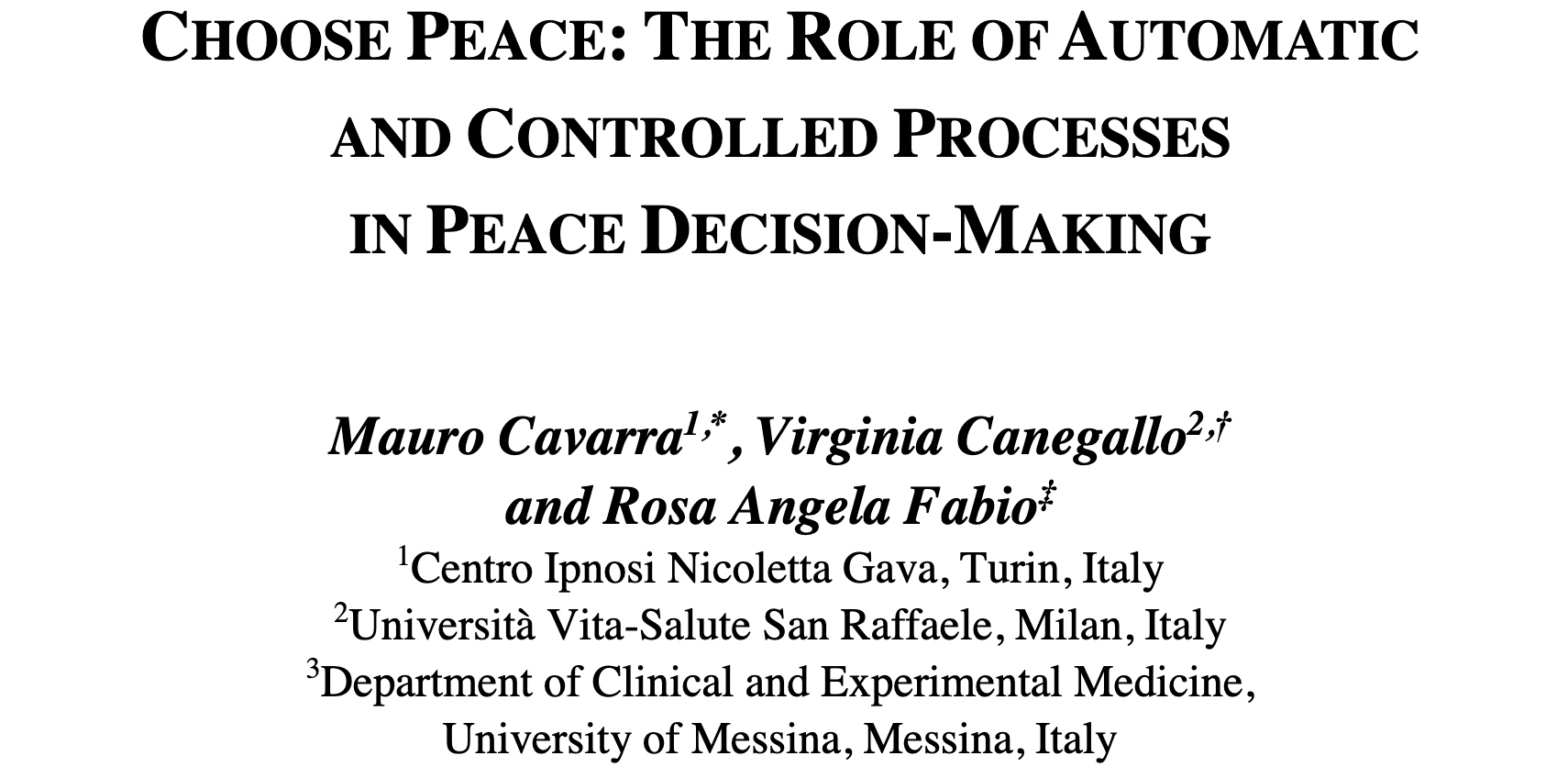
Choose Peace: The role of automatic and controlled processes in peace decision making
The aims of this chapter are: a) to give an overview of existing literature on the antecedents of peace choices and attitudes; b) to evaluate the peace choice with reference to both top-down (controlled) and bottom-up (automatic) cognitive processes; and c) to list and describe some of the most influential interventions devised to promote peace choices among individuals, groups, communities and nations. The conclusions are discussed in the light of peace education choices related to both controlled and automatic processes.
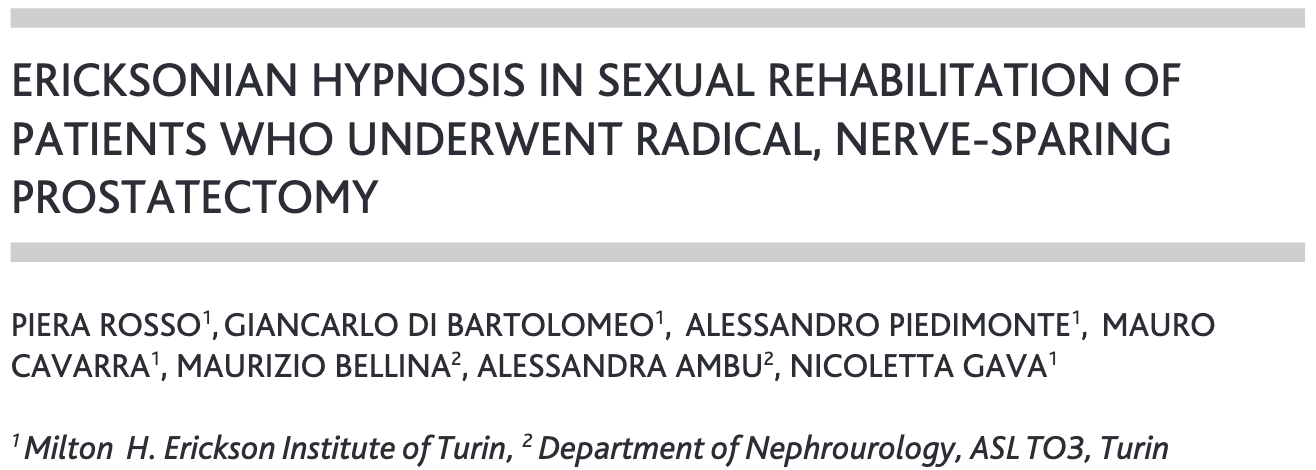
Ericksonian hypnosis in sexual rehabilitation of patients who underwent radical, nerve-sparing prostatectomy
The results of this preliminary study indicate that neither group showed a complete recovery of erectile function, but the use of Ericksonian hypnosis can speed up the recovery of erectile dysfunction and improve the quality of life of patients who underwent nerve-sparing radical prostatectomy and opens thepath to new studies in this field.
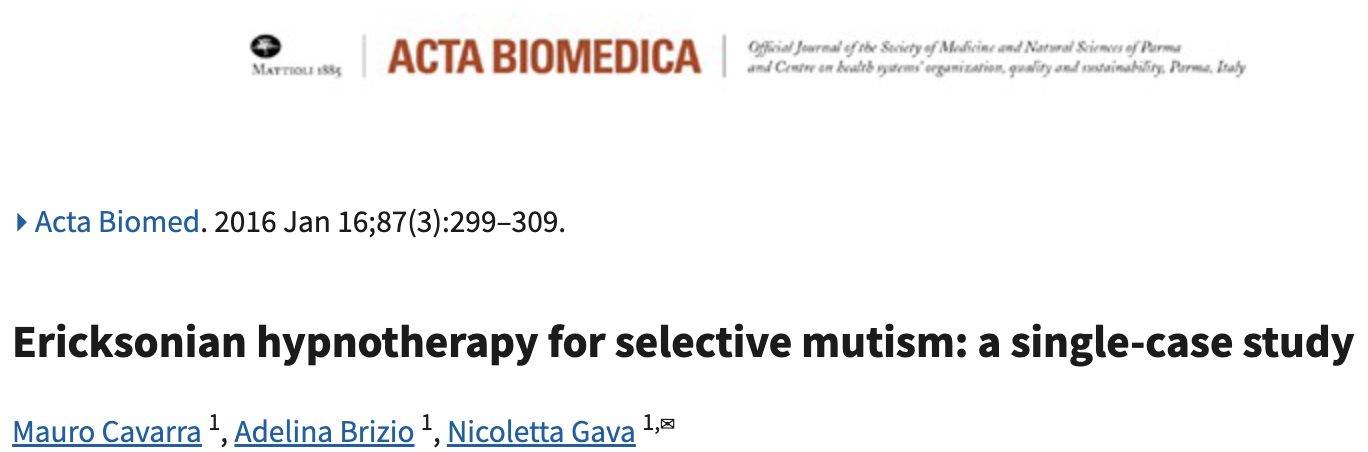
Ericksonian hypnotherapy for selective mutism: A single-case study
This case study, involving a 7-year-old girl, aims at providing preliminary evidence on the effectiveness of Ericksonian hypnosis in the treatment of this condition. A brief review of current evidence is provided.